E-Invoicing in Qatar: What Businesses Should Prepare
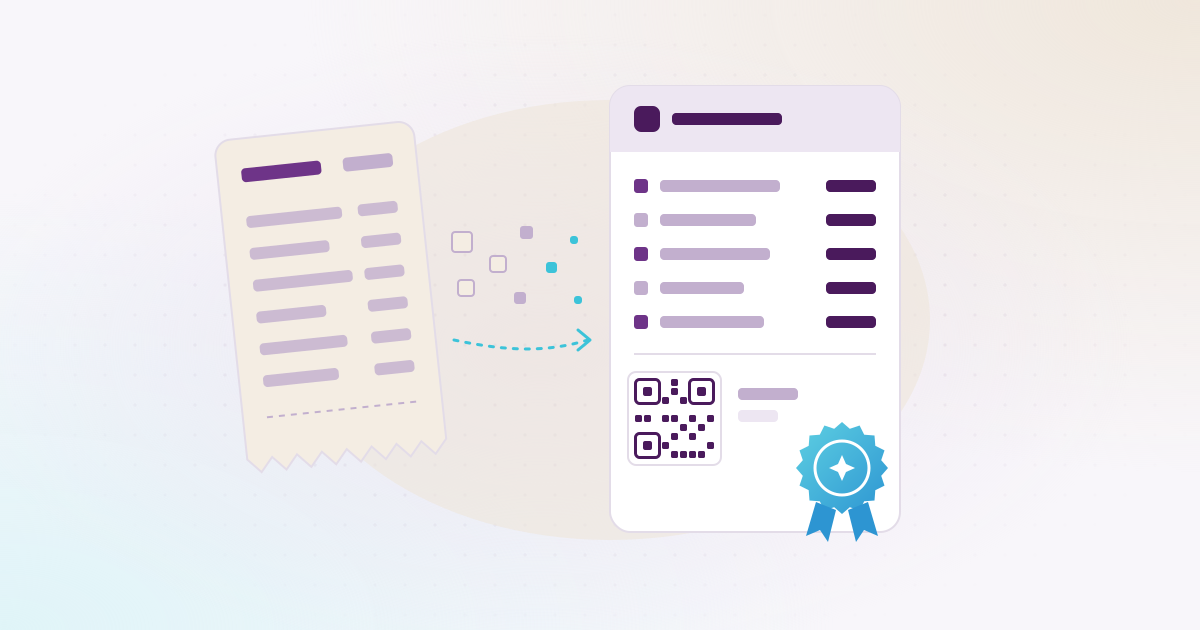
E-invoicing in Qatar is on its way but not yet in force as far as official sources show. The Cabinet approved a draft e-invoicing law and its executive regulations on 6 May 2026, and as of 16 November 2026 no final law, start date or technical rules have been published. What a company can do now is put its invoicing data in order, so it is ready whatever the final rules say.
Akwad Programming sets up ERPNext accounting for companies in Qatar from our office in Doha. We’re a software company, not tax advisers, so this guide only repeats what official and reputable sources say, each linked and checked on 16 November 2026, and then turns to the practical side we know well: invoices, numbering and systems. For your own obligations, follow the General Tax Authority (GTA) and your auditor. We’ll update this page when the official picture changes.
Is e-invoicing mandatory in Qatar?
Not as far as we can find on 16 November 2026. The Cabinet approved a draft law in May 2026, but we found no published final law, start date or technical rules.
Here is what we checked:
- The Cabinet decision. The Qatar News Agency’s report of the Cabinet’s regular meeting on 6 May 2026 says the Cabinet “approved a draft law on E-invoicing and its executive regulations” (QNA, checked 16 November 2026).
- The GTA’s laws page. The laws and regulations page of the General Tax Authority did not list an e-invoicing law when we checked it on 16 November 2026.
- The GTA’s news. The latest announcements on the GTA news page, up to 14 November 2026, did not include an e-invoicing start date or rules.
A draft approved by the Cabinet is a step in the process, not a law in force. Until a law is issued and the GTA publishes how it applies, there is nothing official to say who must send e-invoices, from when, or in what format.
What does the draft e-invoicing law cover?
Officially, only the outline is public: the Ministry of Finance prepared it with the GTA, and it sets the legal framework for issuing electronic invoices and notices.
According to the QNA report, the draft aims “to establish the legal framework governing the issuance of e-invoices and notices”, to improve transparency, to keep up with digital transformation and to provide reliable databases for regulation and oversight. That’s all the official statement says about content.
What has not been published yet:
- which companies and which kinds of sales are covered
- the start date, and whether it comes in phases
- the file format and how invoices reach the GTA
- penalties and transition rules
When will e-invoicing start in Qatar?
No official start date had been published as of 16 November 2026. Until the GTA announces one, treat any date you read as an estimate.
Advisers have shared their expectations. EY’s tax alert of 7 May 2026 says plainly that no dates have been confirmed, then says e-invoicing is anticipated from 1 January 2027, with larger businesses expected in the first phase. It also reports that the GTA has run a pilot with a select group of large entities since late 2025 (EY tax alert, checked 16 November 2026). These are an adviser’s expectations, not rules. KPMG in Qatar says businesses will need to check their invoicing and ERP systems against technical specifications that are still to come (KPMG Qatar tax update, checked 16 November 2026).
What is an e-invoice, compared with a PDF invoice?
An e-invoice is an invoice kept as structured data that another system can read field by field, not just a PDF or a scanned paper. Qatar hasn’t published which format or exchange method it will use.
A PDF looks fine to a person, but a computer can’t reliably tell the customer name from the total. Structured data names each field: the seller, the buyer, the invoice number and date, each line, and the totals. If your invoices already live as records in a system, turning them into whatever format Qatar chooses is a connection. If they’re typed in Word or Excel in each branch, there’s more to change.
What can a company in Qatar prepare now?
Work that helps whatever the final rules say: clean customer data, one numbering system per invoice type, consistent Arabic and English invoices, and a system that keeps every invoice as a record.
- Clean customer and supplier records. One record per customer, with the legal name in Arabic and English as it appears on their commercial registration, the CR number, and a full address. Merge the duplicates your sales team made over the years.
- Numbering you can explain. One series for sales invoices, one for credit notes, with no gaps from deleted invoices. If the numbering started again in a branch, fix it now.
- Correct with credit notes, don’t edit. An invoice that has gone to the customer should stay as it is. Mistakes are fixed with a credit note or a new invoice, so the history is clear.
- Arabic and English that match. Item names, units and the customer’s name should mean the same thing in both languages on the same invoice.
- Clean item codes and units. Each product or service once, with its code and unit, rather than free text typed on every invoice.
- All invoices from one system. Not a Word template in one branch and an Excel sheet in another. If someone can type an invoice outside the system, it will happen.
- A system that can export invoices as data. Ask your supplier how invoices can be read by another system, for example through an API.
- Someone who watches the announcements. Give one person in finance the job of checking the GTA’s news and talking to your auditor when rules appear.
How does ERPNext handle invoices?
In ERPNext, every sales invoice is a record with its own number, customer, items and totals, and once it is submitted it is corrected with a credit note or by cancelling it, not by editing it.
These are the parts that matter for e-invoicing, from ERPNext’s own documentation and code (checked 16 November 2026):
- Numbering. Invoices take their number from a naming series, such as one that starts with the prefix and the year. You can keep a separate series for returns and for each branch (naming series).
- Draft, submit, cancel. A draft has no effect on your books. Once submitted, the invoice posts to the ledger; a change means cancelling and amending it, or issuing a credit note made from the original invoice so the link is kept (sales invoice).
- Language per customer. Each customer has a Print Language that is copied onto their invoices (ERPNext source). We set up invoice print formats with Arabic and English on the same page, with your logo, stamp and signatures where you need them.
- Data out. Any invoice can be read as structured data (JSON) through the Frappe REST API (REST API).
At Asklan for Trading and Agriculture Company, for example, invoices carry retention, and approvers’ signatures and stamps print on the documents that leave the office. See our work with Asklan.
No system can claim to meet Qatar’s e-invoicing rules today, because the rules haven’t been published. For ERPNext, once they are, the work will be a connection that sends the invoices it already holds in the format the GTA asks for, much like a WPS salary file or a payment gateway. More on invoices, cheques and reports in Arabic and English is on our ERPNext accounting page.
What should you watch for next?
Three announcements matter: the law itself, the GTA’s technical rules, and the start date with any phases. Check official sources, not social media posts.
- The law: Al Meezan, Qatar’s legal portal, which the GTA cites as the source for its laws.
- The rules and dates: the GTA’s news page and the Dhareeba tax portal.
- Cabinet decisions: the Qatar News Agency.
If you’re planning a new system anyway, our guide to ERP implementation in Qatar explains the steps, and our guide to ERP cost in Qatar explains what drives the price. To see how invoices, credit notes and Arabic and English print formats work on your own cases, book a demo with our Doha team.