Procurement Process Steps for Companies in Qatar
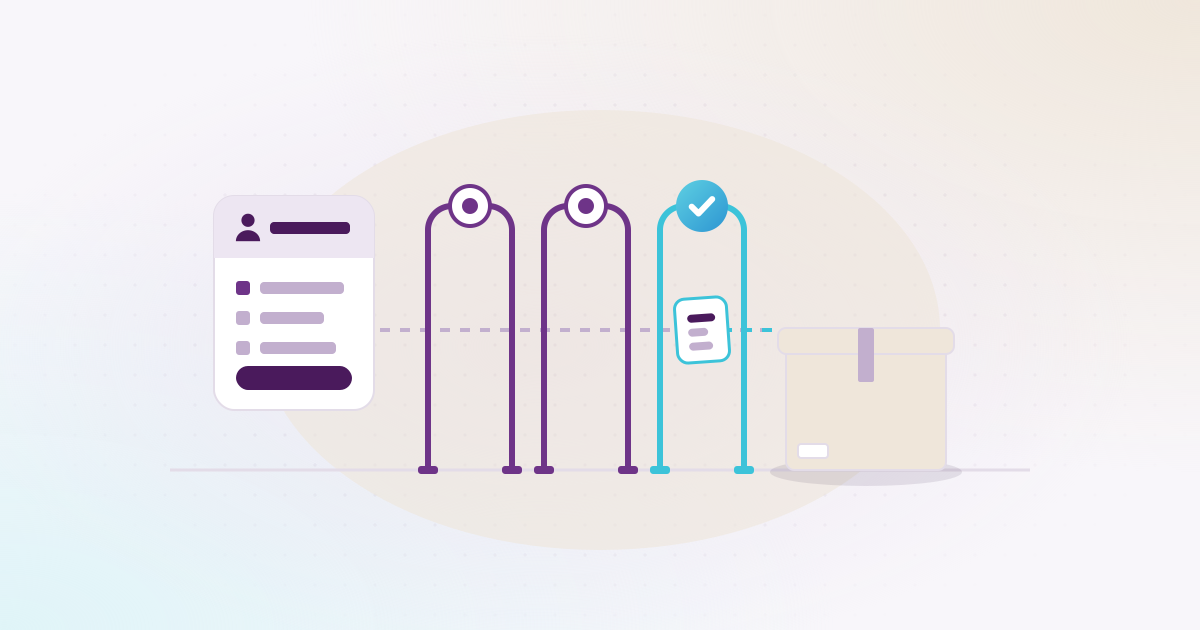
The procurement process in a company in Qatar usually runs in ten steps: someone raises a material request, the buyer asks suppliers for quotations, compares them, gets the purchase approved, sends a purchase order, receives the goods, records the supplier invoice, matches the three documents and then pays. Each step has an owner and leaves a document, so anyone can later see who asked, who approved and what was paid.
We are Akwad Programming, and we set up procurement in ERPNext for companies in Qatar from our office in Doha. This guide explains the purchase cycle as we see it work in trading, contracting and service companies. The ERPNext document and setting names were checked against the ERPNext documentation on 16 November 2026.
What are the steps of the procurement process?
The procurement process has ten steps, from the first request to the payment, and each one produces a document you can trace. The table shows who usually does each step and what it is called in ERPNext.
| # | Step | Who usually does it | ERPNext document |
|---|---|---|---|
| 1 | Ask for what you need | The department, site or warehouse | Material Request |
| 2 | Ask suppliers for prices | The buyer | Request for Quotation |
| 3 | Record the offers | The buyer | Supplier Quotation |
| 4 | Compare the offers | The buyer, with the requester | Supplier Quotation Comparison report |
| 5 | Approve the purchase | Manager, finance, general manager by amount | Approval workflow |
| 6 | Order from the supplier | The buyer | Purchase Order |
| 7 | Receive the goods | The storekeeper | Purchase Receipt |
| 8 | Record the supplier’s bill | Accounts | Purchase Invoice |
| 9 | Match order, receipt and bill | Accounts | Buying Settings checks |
| 10 | Pay the supplier | Finance | Payment Entry |
Small purchases can skip steps 2 to 4. A regular supplier at an agreed price doesn’t need three quotations every time. Decide which purchases need the full cycle and write it down.
What is a material request, and who should raise it?
A material request is the internal note that says “we need this”, raised by the person who needs the item, before anyone talks to a supplier. It records demand only: in ERPNext it creates no stock or accounting entry (Material Request docs).
Without it, requests arrive as WhatsApp messages and phone calls, and nobody can say later why something was bought. A good request has the item, the quantity, the date it is needed, the project or department and a short reason.
In ERPNext a material request can also be created from a sales order, from a production plan, or automatically when stock falls below an item’s reorder level. Reorder levels only help if your stock figure is right, which is why we wrote a separate guide on how to run a stock count your books agree with. And not every request ends in a purchase: if another warehouse has the item, the request becomes a transfer instead.
How many quotations do you need, and how do you compare them?
A common rule is three quotations above a set amount and one below it; your own purchasing policy decides the amount. What matters is that the comparison is written down and kept with the order.
The buyer sends one request for quotation to several suppliers. In ERPNext each supplier on the request can get it by email when it is submitted, and with the supplier portal switched on, suppliers can type their own rates. Offers that arrive by email or PDF are entered by the buyer as supplier quotations, with the original attached (RFQ docs).
The Supplier Quotation Comparison report then shows the offers side by side. Don’t stop at the lowest price. Check delivery time, how long the offer is valid, warranty, payment terms and whether the item matches the specification. Then create the purchase order from the chosen quotation, so nobody retypes the rate.
Who should approve a purchase, and at what amount?
Who approves should depend on the amount, and sometimes on the department or project, with a higher approver for each bigger amount. For example, a department head approves up to QAR 10,000, the finance manager up to QAR 50,000, and the general manager anything above. The figures are only an example; set your own.
Two rules keep approvals honest. The person who asks shouldn’t approve their own request, and the buyer who chose the supplier shouldn’t approve the order alone. Approvals in a system also stop the familiar Doha problem of an urgent order waiting because the manager is travelling: they can approve from their phone.
In ERPNext, approvals are set up with a Workflow. Each step has a state, a role that can approve or reject, and an optional condition such as the grand total, so larger amounts go to a higher role (Workflow docs). For Asklan for Trading and Agriculture Company, we set up purchase order approvals with an approval dashboard for management, and the approvers’ signatures and stamps print on the purchase order.
What goes on a purchase order?
A purchase order is the approved order you send to the supplier, and the agreement you later check the delivery and the bill against. Many suppliers in Qatar call it an LPO (local purchase order).
Put on it everything you will argue about later: item description and specification, quantity and unit, price, delivery date and address, payment terms, and your stamp and signature. Arabic and English on the same document helps when your supplier’s staff and your own read different languages. For Techno Clad Trading & Contracting, we designed branded purchase orders with payment schedules and delivery details.
What is a three-way match?
A three-way match means you pay a supplier only when the purchase order, the goods receipt and the supplier’s invoice agree on item, quantity and price. It stops you paying for goods that never arrived or at a price you never agreed.
The match starts at the warehouse door. The storekeeper checks the delivery against the purchase order and records what actually arrived, accepted and rejected, in a purchase receipt. This is the step that most often goes wrong, because the driver is waiting and nobody wants to count. In ERPNext the purchase receipt is created from the order, so the supplier, items and rates come across. Accepted goods go into stock, and rejected units go to a separate rejected warehouse, so damaged items are never counted as sellable. Items that need an incoming quality inspection can’t be received without one (Purchase Receipt docs). Stock updates as soon as the receipt is submitted, in ERPNext inventory management.
ERPNext can then enforce the match with three settings in Buying Settings:
- Is Purchase Order required for Purchase Invoice & Receipt creation? Set to Yes, and no receipt or invoice can be made without an order.
- Is Purchase Receipt required for Purchase Invoice creation? Set to Yes, and no invoice can be recorded for goods not received.
- Maintain same rate throughout the purchase cycle, with the action set to Stop or Warn when the invoice rate differs from the order.
When the invoice is created from the receipt, the quantities come across, and accounts only check the price and the totals against the supplier’s paper copy.
How are suppliers paid in Qatar: transfer, cheque or PDC?
Suppliers in Qatar are paid by bank transfer or by cheque, and in our projects post-dated cheques (PDCs) still come up all the time. Whatever the method, the payment should be recorded against the purchase invoice it settles.
In ERPNext a Payment Entry allocated to a purchase invoice reduces what you owe on it, and the reference number and date hold the cheque or transfer details (Payment Entry docs). For post-dated cheques, the question is when the cheque counts as paid, so agree with your accountant how cheques are tracked until the bank clears them. We built bulk entry of post-dated cheques for Asklan, and cheque clearance and bounced-cheque handling for Ellora Group. Payment terms on the order, such as an advance and a balance on delivery, show finance what falls due each week in ERPNext accounting.
Where should you start?
Write your current process on one page: who asks, who approves at which amount, who receives and who pays. Most companies find one or two steps that live only in WhatsApp; those are the ones to fix first.
When you are ready to put the whole cycle in one system, see how we set up ERPNext procurement for companies in Qatar, read what an ERP system costs in Qatar, or book a demo with our team in Doha.